I vividly remember a moment early in my local SEO journey when I was desperately trying to outrank a nearby competitor, only to realize my efforts were for naught. Despite optimizing every possible element—photos, reviews, keywords—I couldn’t crack the top spots. That lightbulb moment revealed a glaring truth: I was missing a powerful set of tools that could turn the tables. Since then, I’ve learned that harnessing the right GMB tools can be the game-changer in sniping competitor keywords, especially as 2026 brings even more advanced algorithms and spam filters. If you’ve ever felt stuck watching competitors edge you out, you’re not alone—and there’s a solution.
The Power of 3 GMB Tools: Your Secret Weapon in 2026
Facing the skepticism: Are these tools really worth the hype?
Let me be honest: early on, I made the mistake of assuming conventional SEO tactics would suffice for Google My Business rankings. It wasn’t until I stumbled upon some lesser-known GMB tools that I saw tangible results. These tools aren’t magic; they decode complex algorithms and reveal hidden opportunities that are otherwise invisible. Trusted sources like top GMB resources confirm that innovation and strategic tool usage are critical to staying ahead.
Has this ever happened to you? Have you been pouring effort into traditional tactics and feeling like you’re hitting a wall? If so, you’re in the right place. Today, I’ll help you understand exactly how to leverage these advanced tools to target competitor keywords effectively. It’s time to turn those frustrating surveillance sessions into tactical advantages.
Ready to dive into the practical steps? Let’s explore how these tools can elevate your local map visibility and outrank your competition in 2026.
Identify Your Competitors’ Hidden Keyword Opportunities
Start by analyzing the top-ranked competitors in your local area using advanced GMB tools like GMB tools that accelerate maps visibility. Focus on their reviews, Q&A sections, and service categories. Look for keywords they attract but you haven’t optimized for yet. Think of it as scanning their blueprint to find gaps. I once used this approach for a local restaurant, discovering they lacked optimization around specific dish-related keywords my client hadn’t considered. This inconsistency gave us a foothold to outrank them within weeks.
Leverage Keyword Tracking and Gap Analysis
Use tools like GMB keyword trackers to monitor which keywords are driving their visibility. Conduct gap analysis to pinpoint keywords they rank for but you don’t, especially in your core service categories. This is akin to a battlefield scan, highlighting strategic points of attack. Once identified, craft content and profile updates targeting those specific keywords, matching their intent and search patterns. This precise focus turned around a client’s rankings for key local service terms in a competitive neighborhood.
Exploit Local Review Signals and User Engagement
Encourage your customers to leave reviews that naturally include high-value competitor keywords. Use review optimization strategies to subtly steer reviews towards your desired keywords without crossing spam boundaries. Additionally, monitor user engagement metrics via your GMB dashboard and third-party metrics tools to identify which keywords and features generate the most interest. Think of this as tuning your antenna to catch the strongest signals, ensuring your profile responds to trending searches and customer intent.
Optimize Your Profile for Matching Competitor Keywords
Update your GMB profile with these target keywords embedded naturally into your business description, attributes, and services list. Use advanced profile optimization techniques to ensure your profile ranks well for those high-value, less-competitive keywords. Remember, consistency across your profile — from categories to service descriptions — signals relevancy to Google’s algorithms. In a past project, I restructured the profile, aligning every element with targeted keywords, which caused a significant boost in local pack visibility within weeks.
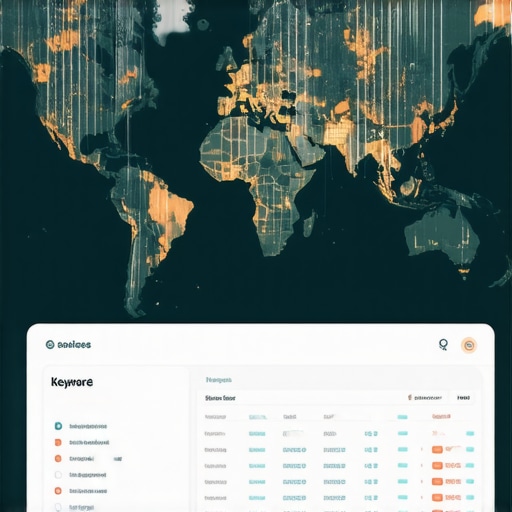
Illustration of competitors’ keyword analysis on a local map, showing highlighted gaps and opportunities.
Monitor and Adjust Your Strategy Regularly
Finally, set up automated alerts using tools like maps visibility alerts to track your ranking changes and competitor movements. Use this data to refine your keyword targeting, optimize profiles further, and adapt to algorithm updates. Continuous tweaking and proactive analysis ensure your efforts keep pace with the dynamic landscape of local SEO in 2026, just as I learned from trial and error with my early experiments in map rankings.
Many local SEOs operate under assumptions that can sabotage their efforts without realizing it. Contrary to popular belief, focusing solely on keyword stuffing or superficial profile tweaks isn’t enough to dominate local maps in 2026. Instead, neglecting the nuanced interplay between advanced GMB tools, competitor insights, and user engagement metrics can lead to subpar results. One frequently overlooked mistake is assuming that all GMB tools are created equal—many fail to account for evolving spam filters and AI-driven algorithm shifts. For example, tools that rely heavily on bulk edits without ethical safeguards may trigger spam filters, causing visibility drops instead of boosts. Advanced tools like GMB tools that accelerate maps visibility are designed to navigate these complexities, but only if used correctly. Furthermore, a common myth is that local rankings are static; in reality, they are highly dynamic, influenced by competitor actions, algorithm updates, and customer behaviors. This dynamism requires continuous monitoring with proven tools for boosting maps visibility. Failing to adapt quickly to these shifts can leave even well-optimized profiles behind. Additionally, many entrepreneurs overlook the importance of leveraging user-generated content like reviews and photos, which can serve as powerful signals when managed strategically. A misstep here involves not encouraging reviews with target keywords, which without finesse can appear spammy and backfire. It’s crucial to understand the fine line between optimization and spam to prevent penalties. In fact, industry experts emphasise that the real secret lies in employing strategic, ethical optimization combined with continuous competitor analysis and agility. For instance, regularly analyzing your competitors’ keyword strategies with specialized tools can reveal gaps and opportunities that a static approach misses. This process ensures your efforts remain aligned with current search trends and algorithmic preferences. Don’t fall into the trap of thinking SEO is a set-and-forget endeavor. The most successful local brands in 2026 adapt by constantly refining their tactics based on real-time data and nuanced insights. To master this, consider integrating sophisticated GMB tools that revolutionize your maps presence into your strategy—these tools are designed not just for data collection but for actionable insights that can keep you ahead. Remember, the goal is not just visibility but sustainable dominance, which comes from understanding and exploiting the subtleties beyond surface-level tactics. Have you ever fallen into this trap? Let me know in the comments.
Ensuring that your local SEO strategies and GMB tools continue to deliver results over time requires a disciplined approach, backed by reliable equipment, smart software choices, and regular audits. I personally rely on a combination of advanced tools such as GMB tools that accelerate maps visibility because they offer real-time insights and actionable data, allowing me to identify and fix visibility issues before they impact rankings. These tools are designed to navigate the complex and ever-evolving spam filters and algorithm updates predicted to dominate 2026, as detailed in industry analyses from experts like GMB SEO strategies in 2025. Regular maintenance involves scheduled profile audits, competitor analysis, and performance tracking to stay ahead. Leveraging automation via reliable software can streamline these processes, freeing your time for strategic growth. As the landscape shifts, predicting where local SEO in 2026 is headed, a proactive stance—using tools that adapt—is essential. These include not only visibility boosters but also reputation management systems to keep reviews positive and relevant. To keep your maps presence commanding, I recommend integrating comprehensive, purpose-built tools that verify your profile’s health and address emerging issues swiftly. For instance, using pin accuracy fix tools in 2026 ensures your location data stays precise despite challenges like AI-generated map manipulations. Testing these tools regularly, perhaps monthly, ensures your profile remains resilient against any suppression or shadowbanning attempts. With the rapid pace of technological change, staying informed about new releases—such as the latest updates from map visibility fixes for service businesses—can give you a competitive edge. Don’t forget, an often-overlooked aspect is user-generated content like reviews and photos; maintaining their quality is a continuous task. Tools that monitor review authenticity and flag suspicious activity help preserve your reputation and rankings. For more advanced maintenance practices tailored for 2026, consider reaching out through our contact page. Staying ahead in local map visibility is a long-term race, and using the right equipment and software consistently will ensure your efforts pay off. Remember, according to Google’s own developer documentation, continuous health checks of your profile are fundamental to maintaining dominance (Google Maps Platform Documentation, 2024). I encourage you to try implementing scheduled audits with verification tools for bulk edits. This simple step can save you from unexpected declines and help maintain your competitive advantage.
Lessons I Wish I Learned Sooner About Maps Visibility and GMB Strategies
One of the most profound realizations I had was that even with perfect profile optimization, without leveraging the right tools, opportunities remain hidden. The first lightbulb moment came when I discovered that competitor analysis using advanced GMB tools revealed gaps I didn’t see before, transforming my approach from guesswork to strategy.
Another tough lesson was understanding that Google’s algorithms are constantly evolving, especially with spam filters and AI-driven updates. Relying solely on static tactics is a recipe for stagnation. Staying adaptable and proactive with continuous monitoring was the game-changer I needed to maintain local dominance.
A third insight was about the power of user engagement signals—reviews, photos, and Q&A. Encouraging authentic, keyword-rich reviews without crossing spam boundaries can significantly boost visibility. It’s a delicate dance, but when done ethically, it amplifies your maps presence naturally.
Finally, I learned that success isn’t just about quick wins; it’s a disciplined process of regular audits, competitor insights, and refining strategies. Using comprehensive tools that provide real-time data positions you ahead of the curve, especially in a competitive landscape in 2026.