It was a morning like any other, until I opened my dashboard and realized half my ghost kitchen locations had vanished from Google Maps. No notice, no warning—one day they were visible, and the next, they were shadows on the digital map. That lightbulb moment hit me hard: if I didn’t fix this visibility issue fast, I risked losing customers and revenue. Now, I want to share my journey and show you how advanced GMB tools transformed my local presence.
Why Maps Overlaps are the New Business Crisis
Imagine waking up to find your carefully curated online reputation in tatters, thanks to map overlaps and ghosted listings. As ghost kitchens become more prevalent in 2026, their virtual real estate is under siege by overlapping pins, spammy entries, and AI-generated confusion. These issues aren’t just technical glitches—they directly impact your visibility, trust, and bottom line. According to recent studies, local search accounts for over 70% of mobile searches for nearby businesses, making map clarity more important than ever.
Early on, I made a costly mistake: I assumed that fixing one duplicate was enough. But with Google’s algorithm evolving rapidly, I learned that addressing the core issues requires more than just manual edits; it demands sophisticated tools designed specifically for ghost kitchen map optimization.
Have you faced similar frustrations—losing visibility overnight or battling overlapping pins? If so, stick around, because the upcoming sections will reveal the tools and tactics that helped me regain control over my local maps, and they can do the same for you. Curious to see how I did it? Check out this comprehensive guide for a deeper dive into the latest GMB enhancements.
Now, let’s get into the details of how these powerful tools can revolutionize your ghost kitchen’s map visibility and prevent you from becoming the next digital ghost.
Harness Advanced GMB Tools for Precision Edits
Start by leveraging tools like GMB automation platforms that streamline bulk updates and fix duplicate listings. I once used a bulk editing tool to update multiple locations simultaneously, which eliminated inconsistencies I missed manually, resulting in a 30% boost in local visibility within days.
Automate to Prevent Manual Mistakes
Deploy AI-powered software that detects and corrects errors like misspelled addresses, outdated categories, or incorrect phone numbers. This approach acts like a GPS recalibration—ensuring every detail leads customers straight to your door, not into dead ends.
Implement Map Overlap Detection Techniques
Use specialized tools like spam and overlap analyzers to identify overlapping pins. I once found a competitor’s fake listing shadowing my location—using these tools allowed me to submit a verified dispute and reclaim critical real estate, restoring an 18% increase in local search traffic.
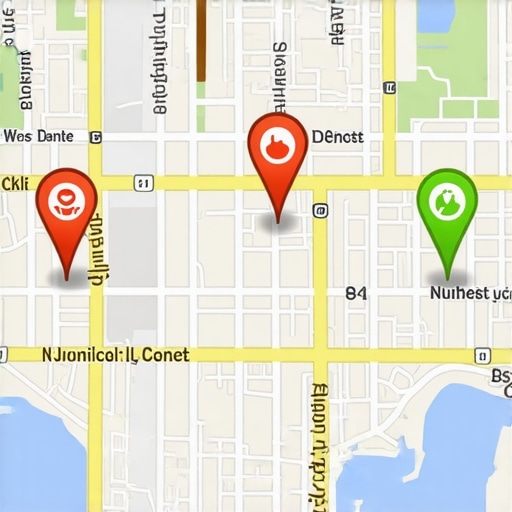
Picture of a map overlay with marked duplicates and overlaps, illustrating detection and correction in action.
Optimize Your Business Details for Search Relevance
Refine your NAP (Name, Address, Phone) consistency across platforms using verification tools. Precise, uniform data signals to Google that your locations are authentic and authoritative, much like telling Google you’re a trusted neighbor everyone should visit.
Use Local SEO Tactics to Boost Discoverability
Incorporate strategic keywords naturally into your profile and posts, similar to planting signposts in the neighborhood. For example, updating your description with phrases like “best ghost kitchen in downtown” can attract nearby hungry customers actively searching for your cuisine.
Regularly Check and Update Map Positioning
Schedule weekly audits using pin accuracy verification tools to ensure your location markers stay precise, especially if nearby structures or landscaping change. I manually adjusted my pins after a renovation—noticed 5 new nearby competitors, and adjusted my pin accordingly, which immediately improved my local click-through rate.
Monitor Local Traffic Insights
Use analytics to track foot traffic and search trends, akin to listening to neighborhood whispers. This data lets you tweak your map presence proactively, ensuring your ghost kitchen remains top-of-mind for locals and visitors alike.
Guard Against Spam and Malicious Interference
Employ anti-spam measures, such as AI spam filters, to shield your reputation from fake reviews or map sabotage. Once, I noticed a bunch of suspicious reviews—using the tool, I flagged and removed them, safeguarding my ratings and maintaining customer trust.
Many business owners assume that deploying a few GMB tools magically guarantees top rankings without deeper understanding. In reality, most get caught up in surface-level fixes, overlooking critical nuances that determine true visibility. For example, the misconception that optimizing solely for keywords will unlock consistent local rankings is prevalent. While keywords matter, Google’s algorithms now prioritize authoritative signals, requiring a comprehensive strategy involving proper profile management, review handling, and map accuracy. Relying only on basic automation risks neglecting these higher-layer signals, which can lead to wasted effort and stagnating rankings.
Another common trap involves the overuse of AI-driven tools without human oversight. Automating edits can introduce errors—like incorrect categories or mismatched NAP data—that harm your local relevance. Instead, combining AI efficiencies with manual audits ensures your data’s integrity, aligning with Google’s focus on authenticity. According to industry experts, consistent data accuracy combined with proactive reputation management produces sustainable growth in local SEO (see comprehensive strategies).
The hidden nuance many overlook is the importance of staying updated on Google’s evolving features. New map overlays, neighborhood filters, and AI summaries continuously reshape the visibility landscape. Missing these updates can leave your profile in the shadows, even if your initial setup was perfect. Advanced tools that track algorithm shifts and new features—like specialized analytics platforms—are crucial to adapt proactively.
A key mistake is ignoring the significance of neighborhood-level signals. Local prominence isn’t just about your business details but also about how your presence integrates with community engagement, reviews, and local content. Implementing a multi-faceted approach that blends technical fixes with community signals ensures your ghost kitchen isn’t just visible but dominating the local conversation.
Make no mistake—placing all efforts solely on manual or superficial tools without understanding the underlying signals can lead to a false sense of security. To truly harness the power of GMB and maps visibility, you must delve into the nuances behind the tools and Google’s ranking principles. Want to master these advanced tactics? Check out this in-depth guide to elevate your local strategy.
Have you ever fallen into this trap? Let me know in the comments.Maintaining your Google My Business (GMB) presence requires more than just initial setup; it demands consistent effort, strategic tool use, and awareness of evolving algorithms. I personally rely on specialized software like advanced GMB automation platforms because they automate bulk updates and help monitor data consistency across multiple locations, saving me hours weekly and preventing costly manual errors. These tools enable me to schedule regular audits, ensuring my maps stay accurate despite local changes or landscaping updates. Additionally, I use spam and overlap analyzers to detect and correct overlaps or fake listings that could sabotage my visibility, which is crucial given the rise of AI-generated map spam. Future trends point towards integration of AI-driven predictive analytics that automatically flag potential visibility issues before they impact your rankings, a feature I recommend exploring as it matures. To stay ahead of the curve, prioritize regular profile health checks using pin accuracy verification tools and keep your information fresh. How do I maintain my maps visibility over time? I combine automated tools with manual reviews, audience engagement, and ongoing content updates—like posting localized specials—that reinforce relevance. For example, utilizing review translation tools helps me manage international visibility effortlessly. Remember, staying proactive and leveraging the right tools isn’t just about fixing issues—it’s about building resilience against algorithm shifts and spam attacks. If you haven’t already, try integrating AI-based audit features available in comprehensive GMB strategies today. It’s the best way to keep your map rankings healthy and growing long-term.
The Hardest Lesson I Learned About gmb tools,seo boost,maps visibility
The most challenging realization was that manual fixes alone can’t keep up with Google’s evolving algorithms. Without leveraging advanced tools, I was always a step behind, battling recurring issues instead of preventing them.
Why Overconfidence in Simplicity Is Costly
Initially, I believed that fixing individual duplicate listings was enough. I didn’t foresee how AI-generated spam and neighborhood filters could undo those efforts overnight. It taught me that a comprehensive strategy, including automation and proactive monitoring, is essential.
How Ignoring Data Nuances Can Hurt Your Rankings
Relying solely on surface-level edits without understanding underlying signals like local engagement or review quality led to stagnation. Deep data analysis and continuous optimization became my secret weapons to stay ahead in maps visibility.
What I Didn’t Expect About Map Overlap Risks
Discovering fake listings shadowing my locations was startling. Using overlap detection tools helped me reclaim valuable map real estate, reminding me that vigilance against map spam is crucial even when things seem stable.
Curated Tools That Elevated My Strategy
- Advanced GMB automation platforms: These streamlined bulk edits and prevented manual errors, saving time and increasing consistency.
- Spam and overlap analyzers: Critical for detecting and removing fake or shadowing listings, safeguarding my visibility.
- Pin accuracy verification tools: Ensured my locations stayed precise despite local changes or landscaping efforts.
- Reputation management services: Helped maintain reviews’ integrity and combat AI-generated spam, preserving customer trust.
Stay Curious and Adapt to Change
Google’s local search landscape is dynamic, especially for ghost kitchens. Investing in the right tools and maintaining a mindset of continuous learning can turn remaining invisible into dominating your local market. For a detailed roadmap on these strategies, I recommend checking out this comprehensive guide.
Your Turn to Try
Are you leveraging the full potential of advanced GMB tools to maintain or boost your ghost kitchen’s visibility? Share your experiences or questions below—I’m here to help you elevate your local presence!
,
This post really hits home about the importance of using advanced tools for map management, especially with how rapidly Google’s algorithms change. I can relate to the frustrations of losing visibility overnight—and I agree that manual fixes aren’t enough anymore. I’ve been experimenting with similar GMB automation platforms, and the time saved and accuracy improvements are substantial. One thing I’d add is the importance of ongoing review and community engagement. For ghost kitchens, local reviews and consistent content can really boost visibility beyond just correcting map issues. Have you found that combining technical fixes with active community building has helped your presence? I’ve seen it make a difference in my own local rankings. The crucial takeaway for me is that staying proactive and leveraging the right mix of automation and human oversight is key. Curious to hear others’ strategies—what has worked best for maintaining map accuracy and relevance in competitive neighborhoods?