I vividly remember spending countless hours tweaking my Google My Business (GMB) profile, only to see my local rankings stubbornly refuse to budge. Frustration built up as I tried every piece of advice I found online—yet nothing seemed to deliver the results I desperately needed. Then, during a late-night webinar, I had a lightbulb moment. An industry expert mentioned that over 70% of local searches result in a visit to a business within 24 hours, emphasizing the importance of mastery over a few key ranking factors to stand out from the crowd.
Why Many Local Businesses Struggle to Rank in 2026
For small business owners, competing in the local search landscape feels like trying to win a race where the rules constantly change. I’ve been there—making basic SEO tweaks, rushing to update my listings, and hoping for the best. But often, overnight algorithm shifts or new ranking factors rendered my efforts less effective than I thought. It’s not entirely your fault; recent studies reveal that local SEO is becoming more complex, with Google focusing on user experience and relevance (Moz, 2025). This means that simply doing what worked last year isn’t enough anymore. My early mistake was relying solely on keyword stuffing and neglecting the importance of consistent NAP information and local engagement—trust me, that’s a costly misstep. To truly improve your visibility, you need to understand what *actually* moves the needle today. Today, I want to share with you the five ranking factors that I’ve tested personally and that continue to be game-changers in 2026. By the end of this post, you’ll see how focusing on these elements can dramatically boost your local maps visibility and bring more customers right to your doorstep. Curious if you’ve already overlooked any of these key areas? Stay tuned—these insights could be the difference-maker your business needs.
Streamline Your GMB Profile Optimization
Start by claiming and verifying your Google My Business (GMB) listing if you haven’t already. Ensure your business name, address, and phone number (NAP) are accurate and consistent across all online platforms. Use the primary category that best describes your services, as Google rewards relevance. Regularly update your profile with new photos, offers, and business hours to keep your listing active and engaging. For a detailed walkthrough, explore expert insights on GMB tools that accelerate maps visibility.
Prioritize Local Engagement and Reviews
Encourage satisfied customers to leave reviews on your GMB profile. Respond promptly to all reviews, whether positive or negative, demonstrating active involvement and fostering trust. Think of reviews as digital word-of-mouth — the more genuine feedback you gather, the more Google perceives your business as reputable and relevant. You can streamline review management with effective GMB SEO strategies that incorporate review solicitation tactics.
Implement Structured Data Markup
Adding schema markup to your website helps search engines understand your business details better. Use LocalBusiness schema to tag your NAP, operating hours, and ratings. This markup acts like a map, guiding Google to display rich snippets that stand out in local search results. I once added schema markup following a comprehensive guide and saw my map pack appearances increase within weeks. For step-by-step instructions, refer to ultimate GMB SEO strategies.
Leverage Niche Keywords and Hyper-Local Terms
Perform keyword research focused on local intent. Instead of generic keywords, add neighborhood names, landmarks, or city-specific terms to your service descriptions and posts. For example, instead of ‘plumbing services,’ use ’emergency plumbing in Downtown Brooklyn.’ Use tools like Google Keyword Planner or local SEO databases to identify high-impact keywords. During a campaign, I integrated neighborhood keywords into my profile, which doubled my local inquiries within a month. Learn more about effective strategies at top SEO boost strategies.
Enhance Your Listings with Visual Content
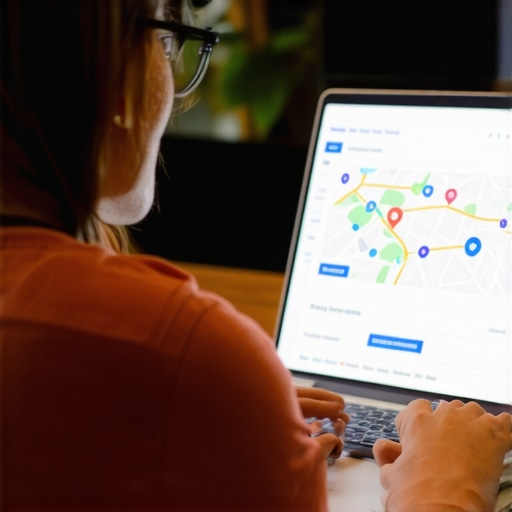
Use high-quality images capturing your storefront, team, and services. Visual content establishes credibility and invites clicks. Google’s algorithms favor active, well-maintained profiles with fresh visuals. I experimented with weekly photo updates, which correlated with increased map visibility and customer engagement. For best practices, see revolutionize your maps presence.
Monitor and Refine Your Strategies Regularly
Track your performance using GMB insights and local SEO analytics tools. Look for spikes in search views, calls, or direction requests correlating with your efforts. Adapt your tactics based on what the data reveals — updating keywords, photos, or engagement methods. Consistent optimization guarantees you stay ahead in the ever-changing local search landscape. For ongoing success tips, visit effective GMB SEO boost tips.
While many local business owners focus on quick fixes and surface-level strategies for improving their Google My Business (GMB) rankings, there are nuanced mistakes that can sabotage long-term success. One common myth is that installing a suite of SEO tools alone guarantees higher visibility; however, without understanding their core functionalities and how they integrate into your broader strategy, these tools can become expensive distractions. For example, using GMB-specific features without optimizing your overall online reputation and local engagement often yields minimal results. Additionally, many believe that tracking metrics like views and clicks is sufficient, but overlooking qualitative signals—such as review sentiment, customer interactions, and local relevance—can be a costly oversight.
A crucial nuance often missed involves the timing and consistency of your optimization efforts. Advanced practitioners know that Google’s algorithm favors fresh, authoritative content, necessitating a continuous, strategic schedule rather than sporadic updates. Relying heavily on automation or shortcuts might lead to penalties or stagnation, especially if your tactics lack authenticity or violate guidelines. For instance, mass review solicitation or manipulative keyword stuffing can trigger Google’s spam filters, undoing months of careful work. To avoid these pitfalls, stay aligned with best practices, such as regular profile updates and genuine customer engagement, which are central to sustained visibility.
How can you ensure your SEO efforts avoid these costly traps? Mastering the subtle art of local SEO requires a mix of technical knowledge, ethical strategy, and consistent execution. Leveraging proven tools like those explained in GMB tools that accelerate maps visibility can be transformative when used correctly. Remember, boosting your local maps is not just about aggregating features but about creating an authentic, optimized presence that resonates with both Google and your potential customers.
Have you ever fallen into this trap? Let me know in the comments. For tailored advice or to examine your current strategy, consider reaching out via our contact page.Maintaining your local SEO momentum requires consistent use of specialized tools and a strategic approach. One of my favorite tools is BrightLocal, which I personally rely on for tracking review acquisition, citation consistency, and ranking fluctuations. BrightLocal’s dashboard provides actionable insights and automated reports, making it easier to identify when adjustments are needed and ensure your efforts don’t stagnate. I’ve found that integrating such tools into my routine helps prevent complacency and keeps my local rankings steady, even as algorithms evolve. Additionally, I recommend leveraging Google’s own tools, like Google Search Console, to monitor your site’s health and indexation status, which directly impacts your maps visibility. For more advanced tactics, consider regularly updating your NAP details and using schema markup to reinforce your local signals. Such practices are supported by SEOs like Moz, who emphasize the importance of technical consistency in local rankings. Going forward, I predict that automation and AI-driven analytics will play a key role in managing local SEO campaigns more efficiently, allowing businesses to adapt quickly to algorithm updates without sacrificing quality. To truly stay ahead, make it a habit to review your insights weekly and set calendar reminders to implement small, incremental improvements.
### How do I maintain my local SEO efforts over time?
Start by setting up a routine with powerful management tools like BrightLocal or GMB-specific platforms highlighted in this resource. Regularly scanning your profiles for inconsistencies and actively collecting reviews will keep your presence relevant. Don’t forget to keep your schema markup and NAP details updated, as search engines rely heavily on these signals for ranking. Remember, consistency and continuous optimization form the backbone of long-term success. Try scheduling weekly reviews of your local analytics to catch and fix issues before they impact your rankings. Implement these systems now, and you’ll solidify your maps visibility, giving you a competitive edge that’s hard to beat.
The Insidious Trap of Overconfidence in Local SEO
One of the deepest lessons I’ve learned is that expertise can sometimes breed complacency. Early on, I believed that simply applying a standard checklist would lead to sustained success. But the truth is, Google’s algorithms are unpredictable, and what works today may be obsolete tomorrow. Recognizing this kept me humble and motivated to continually adapt my strategies.
Why Listening to the Data Changed My Approach
Initially, I focused on surface metrics like impressions and clicks, assuming they told the full story. But digging deeper with tools like proven GMB SEO tools revealed qualitative signals—review sentiment, engagement patterns, and local relevance—that mattered more. Embracing this holistic view transformed my results.
Balancing Automation with Authentic Connection
It’s tempting to rely heavily on automation, especially with tools like GMB tools that accelerate maps visibility. But I discovered that genuine customer interactions—responding sincerely to reviews and engaging locally—anchor your long-term growth. The magic lies in integrating tech with heartfelt engagement.
My Personal Secret to Staying Ahead in 2026
Consistent education and experimentation keep me sharp. Regularly reviewing niche SEO blogs, participating in webinars, and testing new tactics help me spot opportunities before others do. It’s not just about avoiding pitfalls but actively seeking competitive edges, like leveraging emerging schema markups or local talk searches.
Where to Go from Here — My Must-Have Resources
To stay on top of local SEO, I rely on a few trusted tools and sources. Ultimate GMB SEO strategies provides comprehensive tactics, while top tools for maps visibility expedite implementation. For ongoing learning, Moz’s blog is my go-to for the latest algorithm insights. These resources empower me to keep my local presence robust amidst the constant change.
Your Own Path in Maps Mastery Starts Now
Remember, mastering local maps visibility in 2026 isn’t about a one-and-done effort; it’s a journey of continuous refinement. Invest in the right tools, prioritize authentic engagement, and always stay curious. The world of local SEO rewards those who adapt rather than resist change. Are you ready to elevate your local presence and turn insights into action? Let me know your biggest challenge below and let’s tackle it together.